
By: Dr. Rian Adams
Date: December 11the 2025
Something strange happens on the Third Sunday of Advent.
The Church blinks.
Purple loosens its grip. A pink—properly rose—candle appears where it does not belong. Vestments soften. The music lifts its chin. And the readings dare to use a word that feels almost premature:
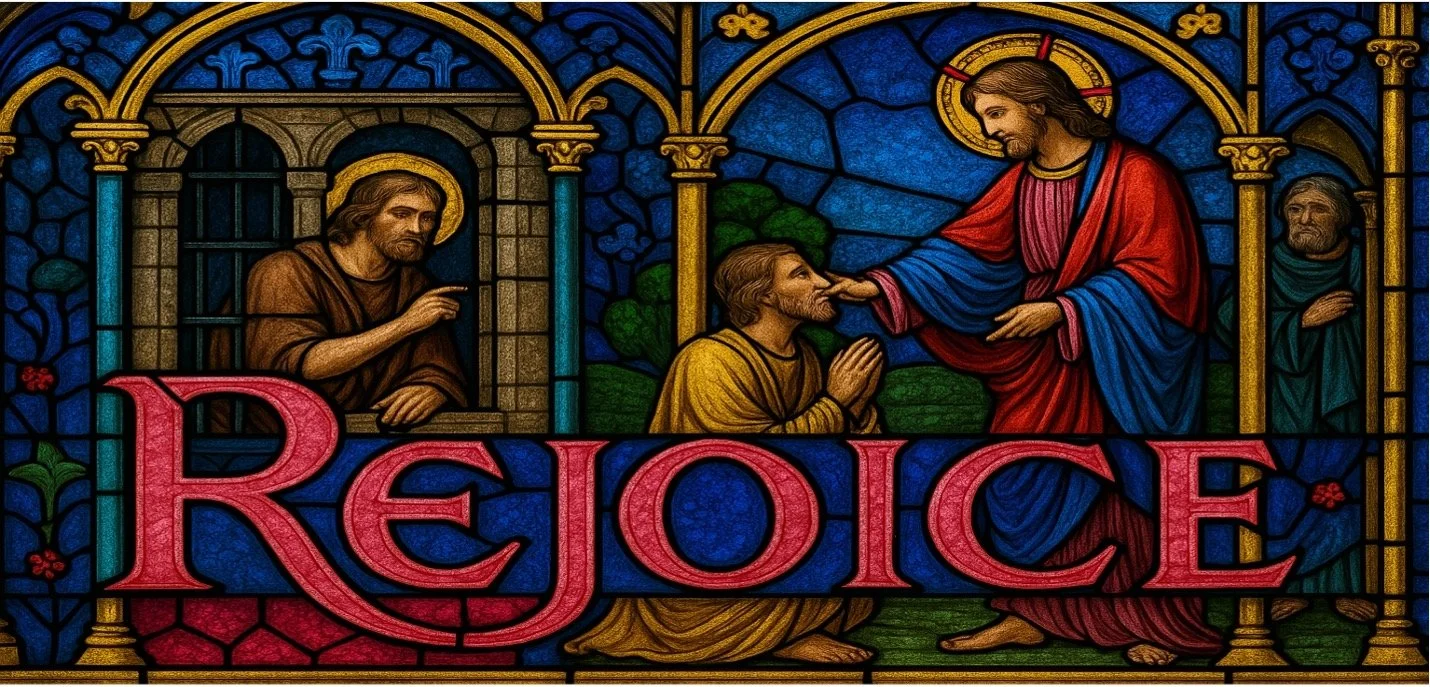
Rejoice.
This is Rose Sunday, traditionally called Gaudete Sunday. It is not decorative. It is not sentimental. And it is certainly not accidental. Rose Sunday is a deliberate rupture in Advent’s discipline—a liturgical interruption that reveals something daring about Christian joy.
What Is Rose Sunday, Really?
Rose Sunday takes its name from the opening word of the traditional Latin introit for the day:
Gaudete in Domino semper
“Rejoice in the Lord always.”
The Church lifts this line from Paul’s letter to the Philippians and plants it directly in the middle of Advent’s waiting. This matters more than we often realize.
Advent is not Lent’s twin. It is not primarily about repentance for past sins, but longing for a future that has not yet arrived. Advent is the season of Israel’s ache, Mary’s waiting body, and John the Baptist’s burning expectations. It is a season shaped by hope under pressure.
Rose Sunday does not cancel Advent. It interrupts it—on purpose.
Why Pink? Why Not White?
White would be dishonest. White belongs to fulfillment. White belongs to Easter morning, Christmas night, and empty tombs. Purple alone, however, can harden into endurance without relief.
Rose is the color of almost.
Liturgically, rose represents joy that has been promised but not yet completed. It is purple wounded by hope. It signals that God has already begun to act, even though the world does not yet look redeemed.
The Church understands something psychologically and pastorally subtle here: waiting without foretaste becomes despair. Rose Sunday exists because God does not require endless grimness as proof of faithfulness.
Joy arrives before circumstances change.
A Brief (and Fascinating) History
In the medieval Church, Rose Sunday came with tangible changes. Flowers returned to the sanctuary. The organ played more freely. Fasting disciplines were relaxed slightly. The rule bent so the soul would not break.
In Rome, the Pope would bless a golden rose on this Sunday and present it to a ruler or city as a sign of favor. The rose was not romantic; it was theological and political. It symbolized divine blessing—and a reminder that such blessing could be withdrawn.
Rose Sunday has always known that joy carries weight. Biblical joy is not saccharine optimism. It has teeth.
Advent III, Year A: John the Baptist’s Question
In Year A, Rose Sunday becomes even more unsettling.
John the Baptist—fiery prophet, wilderness ascetic, and relentless truth-teller—sits in prison. The Messiah he announced has arrived, but not in the way John expected. No judgment fire. No collapsing regimes. No apocalyptic reckoning.
So John sends messengers to Jesus with a question that cuts close to the bone:
“Are you the one who is to come, or should we wait for another?”
This is not disbelief. This is disappointed faith.
John expected a Messiah who would burn down the old world. Jesus brings healing instead. John expected judgment. Jesus eats with sinners. John expected a winnowing fork. Jesus touches the unclean.
Jesus does not answer John with credentials or arguments. He answers with signs:
“The blind receive their sight.
The lame walk.
The poor have good news preached to them.”
Joy, here, arrives quietly. It does not dominate history. It undermines it.
The Theology Beneath the Color
Rose Sunday reveals a truth the Church often forgets:
Joy is not the reward for solved problems.
Joy is resistance in the presence of unsolved ones.
Paul writes Gaudete from prison. John hears Jesus’ answer while still confined. Mary still carries a child whose future includes a cross. The world remains unhealed.
And yet—rejoice.
This is not emotional cheerfulness. It is theological defiance. Joy declares that God’s future has already begun to invade the present, even if the present resists.
Joy Is Not a Feeling—It Is a Gift
Here the Church makes a quietly radical claim.
Joy is not something we generate. It is something we receive.
Rose Sunday is sacramental in shape. The outward signs—color, candle, sound—carry an inward grace. They train the soul to recognize God’s action before visible proof arrives.
This joy does not deny suffering. It simply refuses to let suffering have the final word.
The Church rejoices because she knows how the story ends—even while the middle still hurts.
Why Rose Sunday Matters Now
We live in a culture that oscillates between forced cheerfulness and curated despair. Institutions monetize anxiety. Outrage gets clicks. Even churches can confuse constant seriousness with spiritual maturity.
Rose Sunday resists both despair and shallow positivity.
It teaches the faithful to hold two truths at once:
The world is not yet healed.
God is already at work.
This is grown-up hope. This is Advent faith at full strength.
The Secret at the Center
Here is the deepest mystery Rose Sunday offers.
It assumes that God is already faithful before the evidence appears.
It trusts that the Kingdom does not depend on our vigilance to continue unfolding. It rests—briefly—in a promise secured not by human progress but by divine fidelity.
The pink candle burns.
The questions remain.
The Messiah still arrives sideways.
And then, almost cruelly, the Church returns to purple.
It’s Not an Accident
Rose Sunday does not last. It is not meant to.
Joy is given, then withdrawn, so it can be remembered. The Church offers a taste, not the feast. Enough to survive the waiting. Enough to trust the promise.
You do not stay here. But you leave marked. Pink is not an accident. It is a promise whispered before fulfillment. A joy that dares to arrive early.
And that—perhaps—is the most dangerous theology of all.